Fuel Filter vs Water Separator: What's the Difference?
Fuel filters capture particles; water separators remove water from diesel — many do both. How to tell which stage you're replacing, and what to verify before ordering.
A diesel fuel filter primarily removes solid contaminants, while a fuel water separator is designed to separate water from diesel fuel and often also capture particles. Their functions overlap, but they are not automatically interchangeable. The correct replacement depends on the engine's filtration system and the specifications of the original component.
For truck fleets, construction equipment operators, generator owners, and replacement-parts buyers, this distinction matters. A filter that fits the housing may still provide the wrong type of protection.
Fuel Filter vs Water Separator: A Quick Comparison
Feature | Fuel filter without specified water separation | Diesel fuel water separator |
|---|---|---|
Main purpose | Capture solid contaminants | Separate water and usually capture solid contaminants |
What to verify | Particle-removal efficiency, capacity, and fuel-flow requirements | Water-separation performance plus particle-filtration and flow requirements |
Water collection | Do not assume a collection or drainage function | Often includes a sump, bowl, or other collection area with a drain |
Common role | Often used for final-stage particle filtration | Often used as a primary or pre-filter stage |
Replacement decision | Match the required filtration stage and specification | Match separation performance, interfaces, and system requirements |
These are common arrangements, not universal installation rules. Some systems combine functions in one assembly; others use separate stages. Follow the equipment manufacturer's specification. If you already know you need a separator rather than a plain filter, the selection criteria are covered in our guide to how to choose a fuel water separator for diesel engines.
What Does a Diesel Fuel Filter Do?
A diesel fuel filter captures particles carried by the fuel. The filter element's performance depends on its media and construction, rather than its external appearance alone.
In many two-stage systems, the secondary fuel filter provides fine particle filtration downstream of the primary stage. Donaldson describes this secondary stage as finer particle removal that protects modern high-pressure common-rail fuel systems.
However, "fuel filter" is a broad product name. Some fuel filters also separate water. Check the technical specification instead of assuming that every product described as a fuel filter has the same capabilities.
What Does a Diesel Fuel Water Separator Do?
A diesel fuel water separator helps prevent separated water from continuing through the fuel system. Depending on the design, the media can repel water or help small droplets combine into larger droplets that can collect in a designated area. Many units also filter particles.
This explains why suppliers use terms such as fuel water separator, diesel water separator, and diesel fuel water separator filter for products with overlapping functions.
Water-separation capability must be confirmed for the particular element and assembly — a drain fitting or a transparent bowl alone does not prove equivalent performance. For example, the published specification for one common spin-on separator, the Fleetguard FS20123, lists 93% efficiency in separating emulsified water.
Why Do Diesel Engines Often Use Both?
Particle removal and water separation address different contamination problems. A filtration system may therefore use a primary separator followed by a secondary filter.
In a common arrangement, the primary stage removes water and some particles before fuel reaches the next filtration stage. The secondary stage provides finer particle control. Actual pump positions, pressure conditions, and component order depend on the engine design, as Donaldson's overview of primary and secondary fuel filtration describes.
A product described as a diesel pre filter water separator generally refers to an upstream filtration stage. The description alone does not establish whether it is suitable for your engine.
For buyers, the practical question is: Which stage am I replacing, and which functions must that replacement retain?
Can a Fuel Filter Replace a Water Separator?
Only when the replacement is confirmed to meet the original application's requirements, including water separation where specified.
Matching the thread and gasket is not enough. Before approving an aftermarket replacement, check:
- Application: equipment model, engine model, and serial-number details where needed.
- Filtration role: primary separator, secondary filter, or combined assembly.
- Particle performance: efficiency at a stated particle size, not just a micron number.
- Water separation: documented performance and relevant test conditions.
- Operating requirements: fuel flow, allowable restriction, pressure, and fuel compatibility.
- Interfaces: dimensions, seals, drain, bowl connection, and water sensor where fitted.
Donaldson defines filtration efficiency in relation to the proportion of particles removed at a given size. Consequently, two filters advertised with the same micron number should not be treated as equivalent without additional performance information.
A cross-reference result is useful for identifying a candidate replacement. It should be followed by an application and specification check.
Draining Water and Replacing the Element Are Different Tasks
Draining removes collected water; replacing the element renews the filtration media. One task does not replace the other.
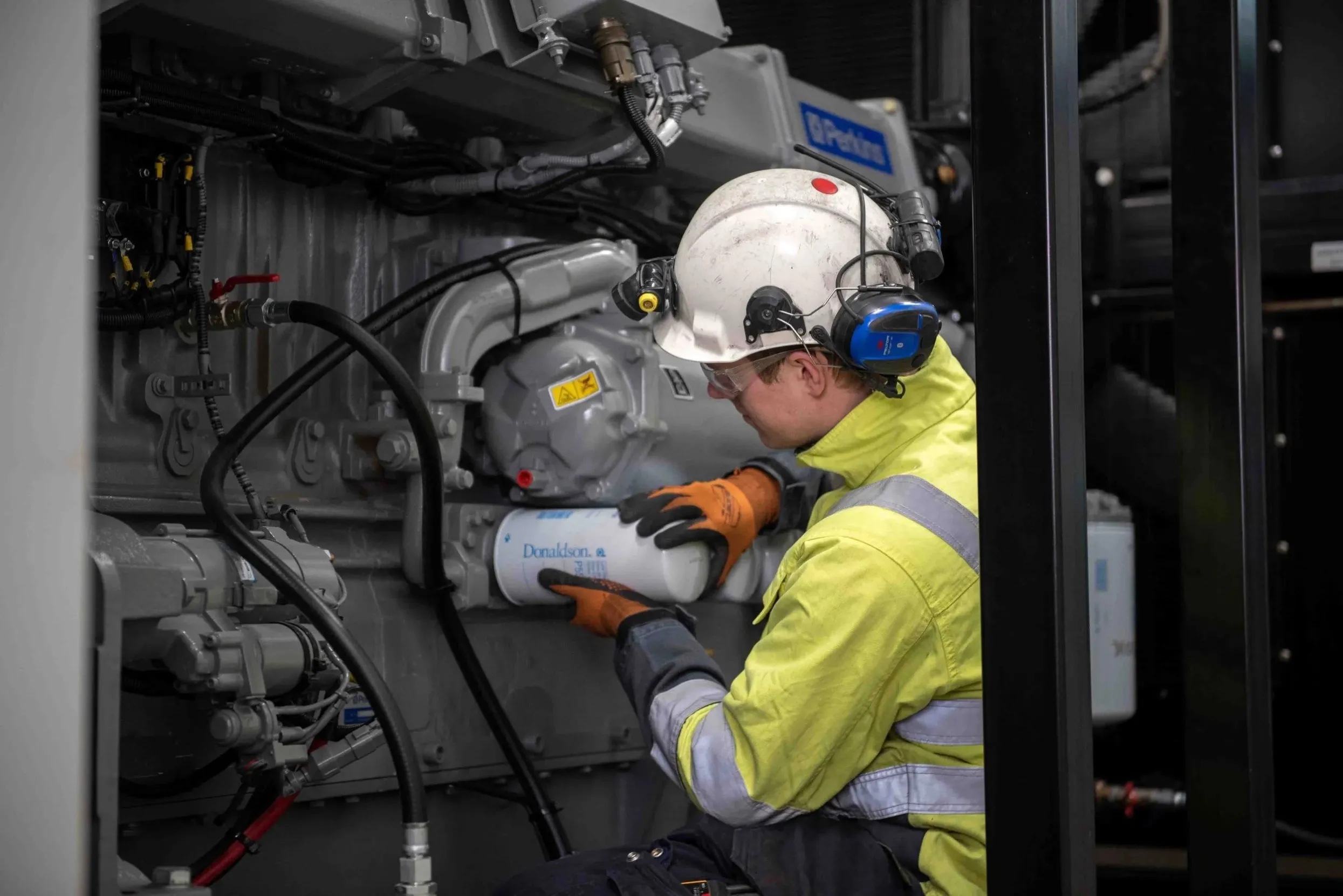
Use the equipment manual for inspection, draining, replacement, and priming procedures. Replacement planning should account for the specified interval and actual operating conditions, including fuel cleanliness, working hours, and contamination history.
If water repeatedly collects in the separator, investigate the fuel supply and storage conditions as well as servicing the separator. Water contamination can damage vital fuel-system components, contributing to filter plugging and other problems.
There is no single replacement interval suitable for every truck, excavator, or generator. Likewise, a product warranty period is not a filter service-life recommendation.
What Should You Send a Supplier Before Ordering?
To reduce selection errors, provide the original part number, equipment and engine details, and clear photographs of the existing filter and its connections. Include the bowl, drain, or sensor arrangement if fitted.
For distributor or fleet orders, also specify quantities, packaging needs, and whether you need an element only or a complete assembly. Ask the supplier to identify any specification or fitment details that remain unconfirmed before purchase.
NAKATU works with partner manufacturers to source aftermarket filters for heavy-duty trucks, construction equipment, and diesel generators. Send your part number and application details for a replacement review and quotation. Final suitability should be confirmed against the equipment requirements and available product documentation.
Frequently Asked Questions
Is a fuel water separator also a fuel filter?
Many are. They combine particle filtration with water separation. Check the individual product specification to confirm both functions.
Does every diesel engine need two separate filters?
No. System layouts vary. Retain the filtration arrangement specified for the engine rather than adding or removing a stage based on a general comparison.
Is a lower micron number always better?
No. Selection must also consider efficiency, flow, restriction, and the intended filtration stage. Use the required specification instead of choosing by micron number alone.
Can I reuse the existing bowl or water sensor?
Only if compatibility and condition are confirmed. Similar-looking replacements may have different interfaces or sealing requirements.
- Donaldson — What Do Filters in Your Fuel System Do?
- Donaldson — Understanding Beta Ratings in Liquid Filters